

Discovering that your personal injury law firm’s website has been penalized by Google is one of the most stressful situations you can face as a firm owner.
Your phone stops ringing, your intake numbers plummet, and that steady stream of case leads you worked so hard to build suddenly disappears.
The good news is that Google penalties are recoverable, though the path forward depends entirely on what type of penalty you’re dealing with.
This article walks you through how to identify whether you’re facing a manual action or an algorithmic penalty, the specific steps required to recover from each, and how to protect your site from future problems.
How to Determine If Your Personal Injury Site Has Been Penalized
The first step in any recovery process is confirming that a penalty actually exists and identifying what type of penalty you’re dealing with.
Many personal injury attorneys assume their site has been penalized when traffic drops, but traffic declines can happen for many reasons that have nothing to do with penalties.
Before jumping to conclusions, you need to investigate.
Checking Google Search Console for Manual Actions
Manual actions are Google penalties issued by human reviewers who have determined that your site violates Google’s spam policies.
The clearest indication of a manual action is a notification in Google Search Console.
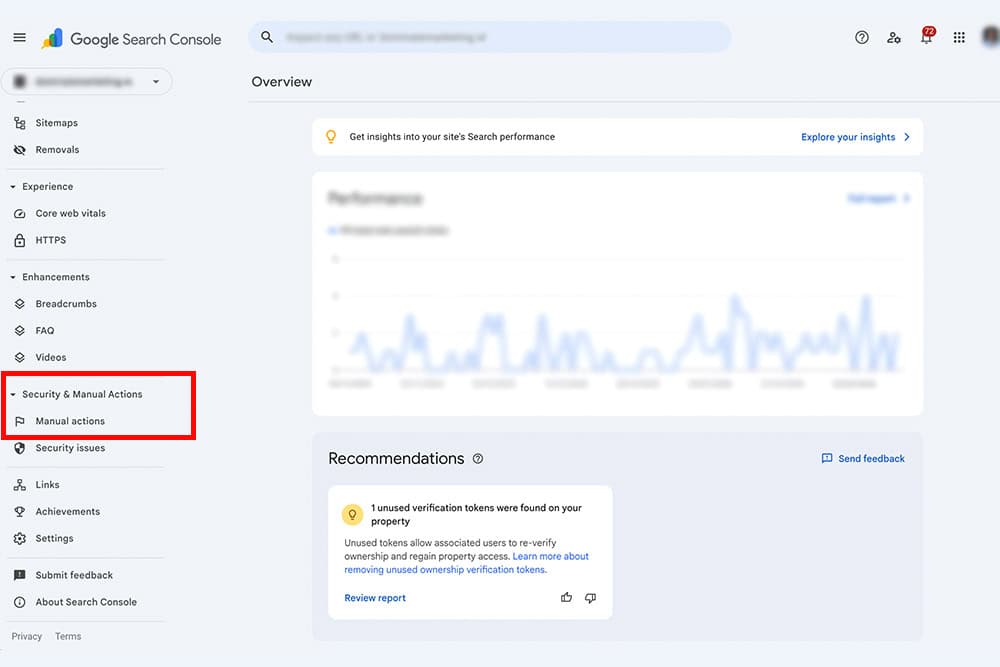
Log into your Search Console account, select your property from the dropdown menu, and look for the “Security and Manual Actions” section in the left sidebar.
Click on “Manual Actions” to see if any penalties have been applied to your site.
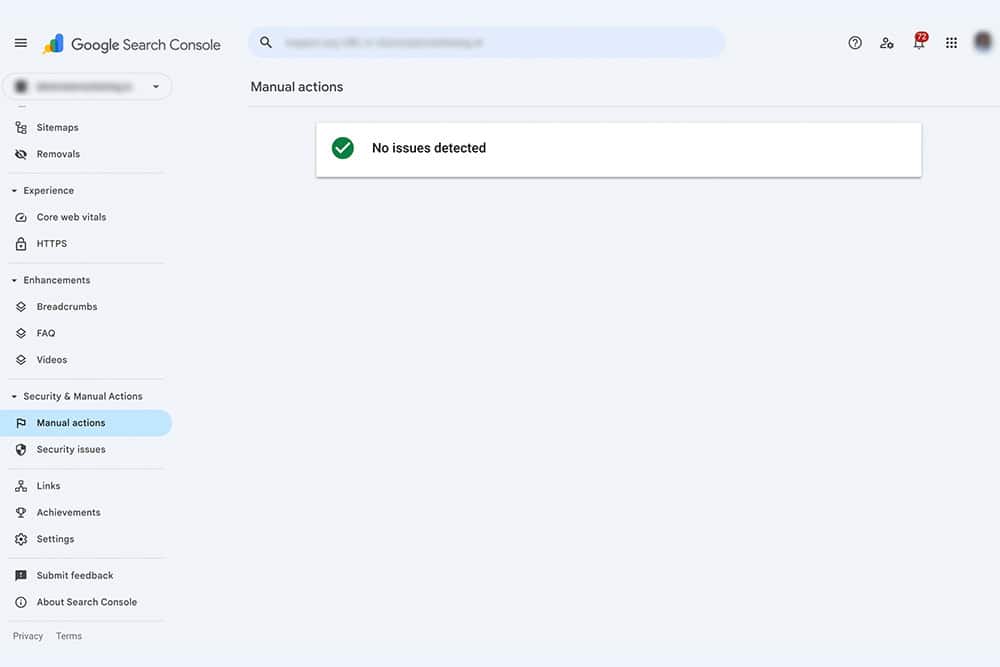
If you see a message that says “No issues detected,” you do not have a manual action penalty.
According to Google’s official documentation, when a manual action is applied, you will receive a notification that outlines the specific violation and the pages affected.
This notification will also include a “Learn more” link that provides detailed information about the issue and steps you can take to fix it.
Identifying Algorithmic Penalties
Algorithmic penalties are different from manual actions because they are applied automatically by Google’s search algorithms rather than by human reviewers.
The challenge with algorithmic penalties is that Google does not notify you when they occur.
You will not receive any message in Search Console telling you that your site has been hit by an algorithm update.
Instead, you need to look for circumstantial evidence.
The most telling sign is a sudden and significant drop in organic traffic that coincides with a known Google algorithm update.
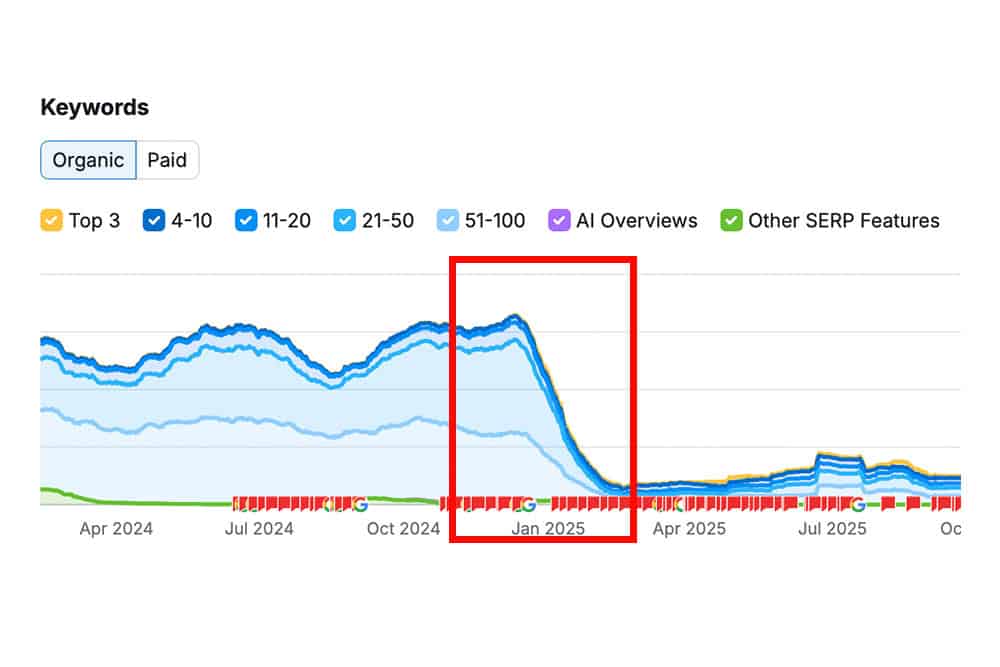
Tools like Semrush or Ahrefs can help you track your organic traffic over time and compare those fluctuations against the dates of major Google updates.
If your traffic dropped sharply around the time of a Core Update, Helpful Content Update, or Spam Update, you are likely dealing with an algorithmic penalty.
Manual Action Penalties and How to Recover
Manual actions are in some ways easier to deal with than algorithmic penalties because Google tells you exactly what the problem is.
The recovery process is straightforward, even if the work itself can be labor-intensive.
According to industry data, the average recovery time for manual action penalties is approximately 10 to 30 days after you implement the necessary fixes and submit a reconsideration request.
Common Causes of Manual Actions for Law Firm Websites
Personal injury law firms most commonly receive manual actions for unnatural link building practices.
This includes purchasing backlinks from link farms or private blog networks, participating in link exchange schemes, or having too many links with exact-match anchor text that looks manipulative to Google’s reviewers.
Other common causes include thin or duplicate content across multiple pages, cloaking or sneaky redirects, and hidden text or keyword stuffing.
If you hired an SEO agency in the past that used black hat SEO tactics, those decisions may be coming back to haunt you now.
Step-by-Step Manual Action Recovery Process
The first thing you need to do is read the manual action notice carefully to understand exactly what violation Google has identified.
Expand the manual action description panel in Search Console to see which pages are affected and what specific issue triggered the penalty.
Next, you need to address the problem on all affected pages, not just some of them.
According to Google’s guidelines, fixing the issue on only some pages will not earn you a partial return to search results.
If the penalty is related to unnatural links, you will need to conduct a thorough backlink audit using tools like Semrush or Ahrefs.
Identify all the links that appear spammy, artificial, or manipulative.
Your first course of action should be to contact the webmasters of the linking sites and request that they remove the problematic links.
Document every outreach attempt you make, including the date, the contact information you used, and whether you received a response.
For links that you cannot get removed, you will need to use Google’s Disavow Tool to tell Google to ignore those links when assessing your site.
Create a text file with one URL or domain per line, using the “domain:” prefix for entire domains you want to disavow.
Upload this file to the Disavow Tool in Search Console.
Submitting a Reconsideration Request
Once you have fixed all the issues identified in the manual action notice, you can submit a reconsideration request through Search Console.
This is your opportunity to explain to Google what went wrong, what steps you took to fix it, and what you are doing to prevent similar issues in the future.
According to Google’s official guidance, a good reconsideration request does three things.
- It explains the exact quality issue on your site.
- It describes the steps you have taken to fix the issue.
- It documents the outcome of your efforts.
Be honest and take responsibility for any mistakes, even if those mistakes were made by a previous SEO agency.
Include links to documentation that shows the work you have done, such as a spreadsheet showing your link removal outreach efforts.
After submitting your reconsideration request, you will need to wait for Google to review it.
According to Google, most reconsideration reviews take several days to several weeks, though link-related requests may take longer.
You will receive an email notification when the review is complete.
If your request is approved, the manual action will be lifted and your rankings should begin to recover.
If your request is denied, you will need to review Google’s feedback, address any remaining issues, and submit another request.
Keep in mind that each rejected request increases the time it takes for subsequent reviews, so it is worth doing the work thoroughly the first time.
Algorithmic Penalties and Recovery Strategies
Algorithmic penalties are more challenging to recover from because there is no reconsideration request process.
You can’t ask Google to review your site after making changes.
Instead, you must fix the underlying issues and wait for the algorithm to recrawl and reassess your site.
According to industry research, algorithmic penalty recovery can take anywhere from 6 months to 2 years depending on the severity of the violation and the quality of your remediation efforts.
Why Algorithmic Recovery Takes Longer
With a manual action, a human reviewer at Google looks at your site after you submit a reconsideration request and decides whether to lift the penalty.
This can happen in a matter of weeks.
With an algorithmic penalty, there is no human review.
Google’s automated systems must recrawl your pages, reassess the signals your site is sending, and update your rankings accordingly.
This process happens on Google’s schedule, not yours.
If your site was hit by a Core Update, you may need to wait for the next Core Update to see any significant recovery.
Google typically releases Core Updates quarterly, which means you could be waiting months just to see whether your fixes are having any effect.
Content-Related Algorithmic Issues
Many algorithmic penalties affecting personal injury law firm websites are related to content quality issues.
The Helpful Content Update specifically targets sites that produce content primarily for search engines rather than for users.
If your site has pages that are thin on substance, contain AI-generated content that was not properly edited, or duplicate information found elsewhere on your site or the web, you may be suffering from this type of algorithmic penalty.
The fix involves conducting a comprehensive SEO audit.
Identify pages that are not providing genuine value to potential clients.
Either improve those pages substantially or remove them from your site entirely.
Instead, you should focus on creating content that demonstrates real expertise in personal injury law, answers questions that actual accident victims are asking, and provides information that they can’t easily find elsewhere.
Link-Related Algorithmic Issues
If your backlink profile looks manipulative, Google’s algorithms can suppress your rankings without issuing a formal manual action.
This happens when the patterns in your link profile raise red flags, even if no human reviewer has looked at your site.
Signs of a problematic link profile include a high percentage of links with exact-match anchor text containing your target keywords, links from irrelevant websites that have nothing to do with law or personal injury, and sudden spikes in backlink acquisition that look unnatural.
Fixing these issues requires the same kind of backlink audit and cleanup that you would perform for a manual action.
If you discover issues with your backlink profile, remove or disavow toxic links and focus on building high-quality links from relevant sources moving forward.
When a Domain Switch May Be Necessary
In extreme cases, algorithmic penalties can be so severe and so difficult to recover from that starting fresh on a new domain becomes the more practical option.
This is typically a last resort, reserved for situations where the domain has accumulated so much toxic history that recovery seems unlikely.
Understanding the Domain Migration Option
When you migrate to a new domain, you are essentially resetting your SEO history with Google.
The new domain won’t carry the penalties that affected your old domain, though it also won’t carry any positive authority you had built up, unless you redirect the old domain with a 301 redirect.
When Domain Migration Makes Sense
Consider a domain migration if you have been dealing with an algorithmic penalty for more than 18 months with no signs of recovery despite comprehensive fixes.
Also consider it if your domain has a history of severe spam violations from previous owners or agencies.
A domain migration can also make sense if the cost of continuing to fight for recovery exceeds the cost of building authority on a new domain.
For a personal injury law firm that depends on organic search traffic for client acquisition, every month spent in penalty limbo is a month of lost revenue.
At some point, the math may favor starting over.
How to Execute a Domain Migration Properly
If you decide to move to a new domain, the migration must be executed carefully to avoid creating new problems.
First, choose a new domain that has no penalty history.
Use tools like Semrush or Ahrefs to check the domain’s backlink profile and look for any signs that it was previously used for spam.
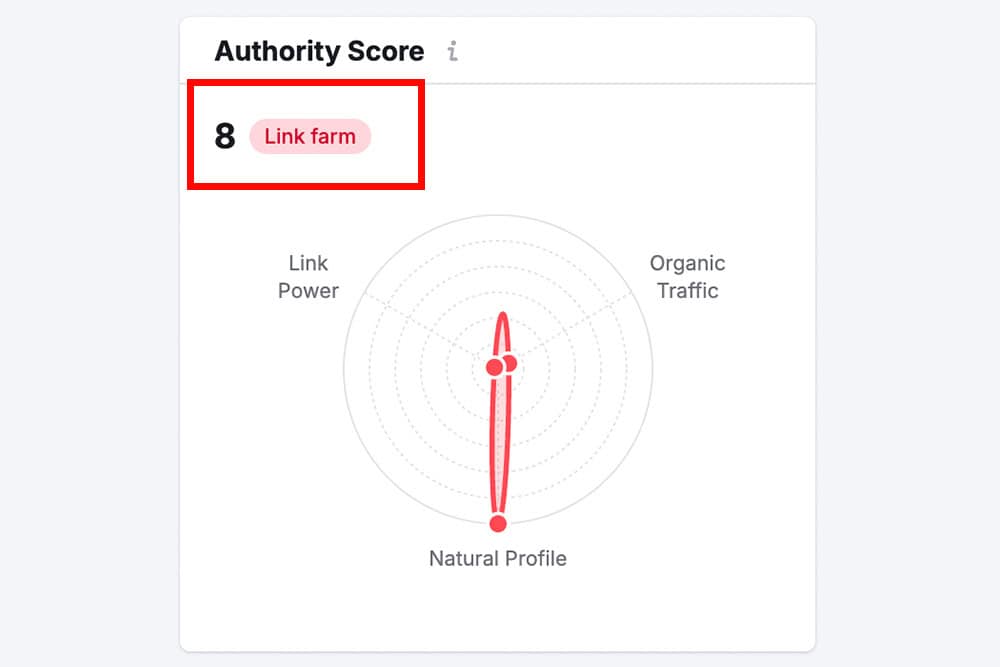
In some case, you’ll want to redirect your old penalized domain to your new domain, to transfer the authority that you previously had.
However, be careful if you choose to do this. Doing so can transfer the penalty to your new domain, defeating the entire purpose of the migration.
In my experience, if you are migrating due to content issues, this should be ok, as long as the violation wasn’t aggregious.
But if you are facing a penalty likely due to severe spam or toxic links, starting from zero is probably the best option.
In these cases, let the old domain expire or simply stop using it while you build up the new site independently.
Set up your new site with a clean architecture, proper internal linking, high-quality content, and a focus on earning links naturally rather than through the tactics that got your old site in trouble.
According to data from domain migration case studies, sites that follow proper migration protocols can see their traffic stabilize and begin recovering within 3 to 6 months.
How to Prevent Future Penalties
The best way to deal with Google penalties is to avoid them in the first place.
For personal injury law firms operating in one of the most competitive SEO niches online, this requires vigilance and a commitment to ethical practices.
Vet Your SEO Partners Carefully
Many personal injury attorneys have been burned by SEO agencies that promised fast results through tactics that violate Google’s guidelines.
Before hiring any SEO agency, ask detailed questions about their link building practices.
Any agency that guarantees specific rankings, offers to build thousands of links quickly, or refuses to explain their methods in detail should be avoided.
Ask for case studies from other law firm clients and verify that those clients have maintained their rankings over time.
An agency that produced short-term gains followed by a penalty is worse than no agency at all.
Monitor Your Backlink Profile Regularly
Set up regular backlink audits as part of your ongoing SEO maintenance.
Use tools like Semrush or Ahrefs to monitor new links pointing to your site.
If you see sudden spikes in links from irrelevant or low-quality sources, investigate immediately.
Competitors may attempt negative SEO attacks by pointing thousands of spammy links at your site.
While Google claims to ignore most such links automatically, proactively disavowing obviously toxic links gives you an extra layer of protection.
Focus on Content Quality Over Quantity
Google’s recent algorithm updates have placed increasing emphasis on content quality, user signals, and E-E-A-T signals, which stand for Experience, Expertise, Authoritativeness, and Trustworthiness.
For personal injury law firms, this means your content should demonstrate genuine legal expertise.
Include attorney bylines with real credentials.
Cite authoritative sources for any statistics or legal information you present.
Create content that actually helps accident victims understand their rights and options rather than content that simply targets keywords.
If you use AI tools to help create content, ensure that a qualified attorney reviews and edits everything before it is published.
The March 2024 Spam Update specifically targeted mass-produced AI content that lacks human oversight.
Maintain Technical Health
Technical issues can contribute to algorithmic ranking problems.
Ensure your website loads quickly on both desktop and mobile devices.
Fix crawl errors, broken links, and redirect chains.
Use proper canonical tags and schema markup to prevent duplicate content issues and help Google understand your pages.
Conduct regular technical SEO audits using tools like Screaming Frog to catch problems before they accumulate and trigger algorithmic penalties.
Get Help Recovering Your Personal Injury Law Firm’s Rankings
Recovering from a Google penalty requires a systematic approach tailored to the specific type of penalty your site is facing.
Manual actions require targeted fixes and a well-crafted reconsideration request, while algorithmic penalties demand comprehensive quality improvements and patience.
At Dominate Marketing, we specialize in SEO for personal injury law firms including recovering from Google penalties and build sustainable organic search strategies.
If your personal injury law firm has been hit by a penalty and you need expert guidance on the path forward, contact us today by filling out the form below to schedule your PI SEO Reality Check.